Should You Dress Your Baby in Flame Retardent Clothings
If you shop at Carter'south or Target for kids clothes yous probably never knew about the laws apropos flame resistant laws for toddler clothing in the US (I'll explain why is that in the article). Information technology wasn't until I started buying organic toddler habiliment and bamboo that I was suddenly bombarded with bright yellow tags stating:
"For child'due south safety, garment should fit snugly. This garment is not flame resistant. Loose-plumbing equipment garment is more likely to catch fire."
The characterization pictured higher up is big and bright and seems a fiddling alarming, only information technology's the police for children's sleepwear.
Earlier you freak out and get downwardly into the rabbit hole of wondering whether your baby or toddler is safe, let me tell you that the law is pretty outdated and there'due south a long story behind it. These yellow tags actually hateful that the apparel are expert for your child and y'all should be looking for them
As my first son spent his early toddlerhood in Europe I've never encountered these tags before we moved back. Why? Considering this law is unique to the US (and parts of Canada), doesn't exist anywhere else.
It's called Flammable Fabrics Act and it's actually very questionable. I really didn't expect information technology to be then bad, but while researching materials for this article I kept finding more and more things that made me question basically every unmarried baby items – whether crib, car seat or article of clothing sold in the U.s.a..
Why practise baby clothes need to exist flame retardant?
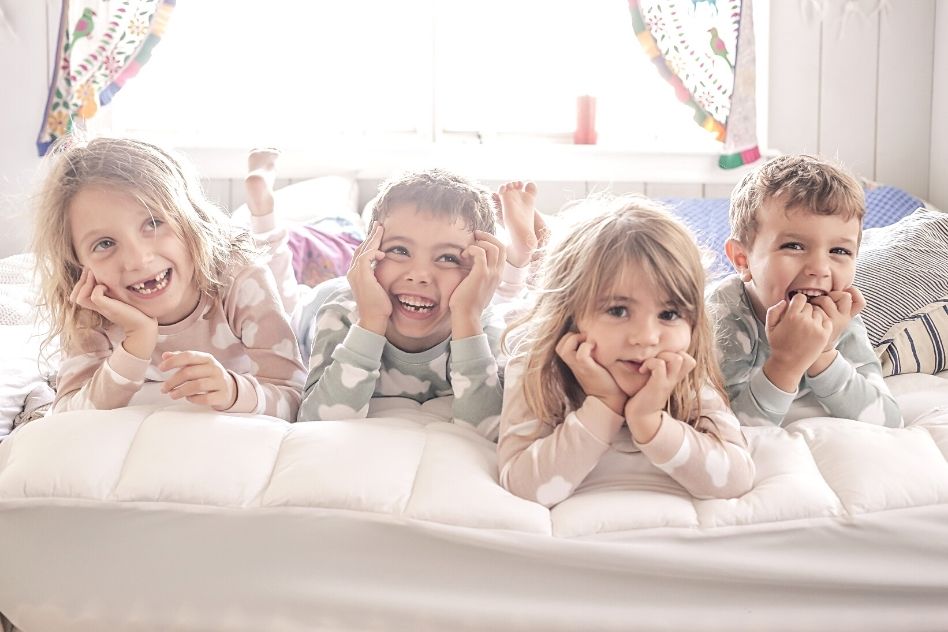
What is the purpose of the children's sleepwear flammability standards? Officially, information technology's to protect children from burns, these rules require that children's sleepwear must exist flame resistant and cocky-extinguish if a flame from a candle, match, lighter, or a similar item causes it to catch fire. The rules cover all children's sleepwear to a higher place size 9 months and up to size xiv and require that.
Many people get confused that the law includes infant items for newborns, only it does not. This is exactly why Carter'southward Sleep & Play (footies) end at six-9 months in size. The rest has to be labeled as "jumpsuit" and doesn't mention whatsoever sleeping or might say "not suitable for sleeping".
If you detect a pajama or footie in size higher up nine months without the yellow tag, do NOT buy it.
Why merely pajamas though? Flame-resistant pajamas controversy
Splendid question. It doesn't brand any sense, particularly considering the fact that in the Us most parents keep kids in their cribs until they're 3, so children don't wander around and play on their own, unlike during the day.
Co-ordinate to stats kids go fire mode more often in daywear than sleepwear. Merely 90 kids (!) became burnt in their pajamas between 1980 and 1994. However, virtually 5000 kids burned in their daywear while actually doing things around the business firm or outside.
Information technology makes even less sense knowing that crib sheets nor sleep sacks are Not subject area to the Combustible Fabrics Human action.
The real story behind the Flammable Fabrics Act
It starts in 1953 when a kid burns during Halloween when his rayon pajamas and what causes hundreds of lawsuits that led to the establishment of The Flammable Fabrics Deed.
Well-nigh 20 years later, Congress passed the 1972 Consumer Product Safety Human action, which established the Consumer Product Safety Committee (CPSC) and in '75 added children'south fabrics, because sure fabrics were establish to get upwardly in flame actually quickly causing children to fire. Ok, but why is that?
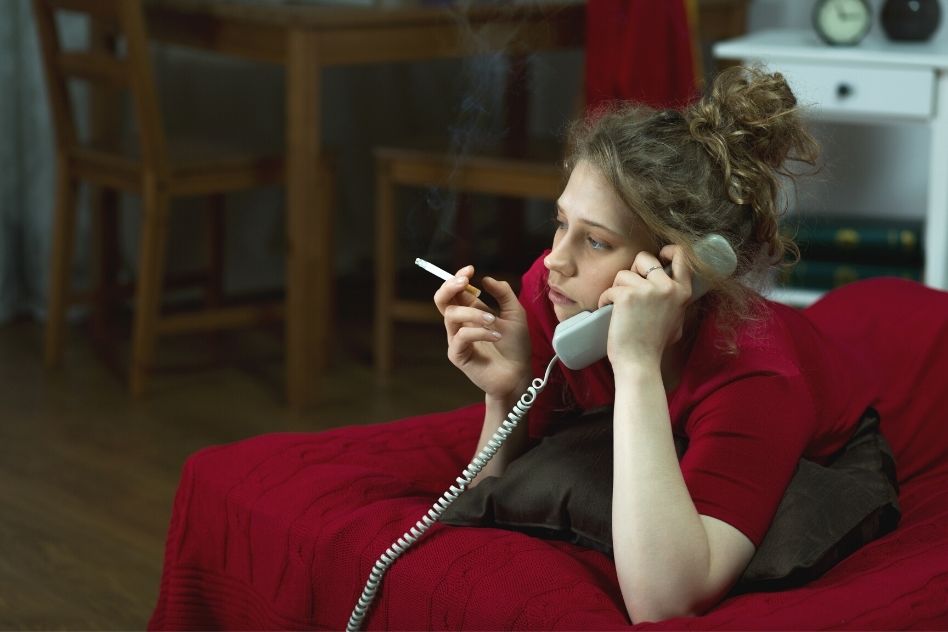
Back and so smoking in bed was a leading cause of house fires.
In Europe, information technology caused people to pay closer attention to a potential fire risk, implemented maximum measurements for nightgowns' width and pajamas have to be labeled with "Warning: Go on AWAY FROM Burn". Due to some accidents with costumes, Halloween costumes and dress-up items must besides be labeled that way.
But, not in the US.
To take the blame off cigarettes, Big Tobacco successfully pushed to add together flame retardants to many products. In 1975, California passed a police requiring the use of flame retardants in piece of furniture, bedding, and even pajamas for little ones, basically fireproofing the world instead of cigarettes.
What people didn't know back then though is how toxic these flame retardant chemicals were, particularly to babies and toddlers. It's a threat far more dangerous than kids' clothes potentially getting on fire. It's then bad that many adults who grew upwardly between 70s and 90s are still dealing with the consequences of it today (cheque out Toxic Hot Seat if you're interested) and meanwhile kids were still being admitted to infirmary with burns.
"We're seeing effects on the developing reproductive system. In a population of children that have been exposed to flame retardants, those children accept lower IQ, more difficulty in learning. Forth with thyroid issues, cancer and other illnesses." – quote from Linda S. Birnbaum, director of the National Institute of Ecology Health Sciences, who also mentioned that flame resistants delay the fire by… 20 seconds at the nearly (AKA not very helpful).
Flame retardants accept absolutely no functional purpose, they're just toxics we're loading our kids with.
In fact, some tin can cause more harm particularly in car seats. Flame retardants can become acutely hazardous when they burn. When foam containing pentaBDE (abrominated FR) burned in ane study, for case, information technology produced twice as much smoke, vii times as much carbon monoxide, and 70 times equally much soot as foam without flame retardants. Information technology was too institute that a typical foam containing pentaBDE provided just a 3-second delay.
Are flame retardants in motorcar seats necessary? Has the requirement for car seats to comply with FMVSS 302 saved lives and prevented injuries?
NHTSA cannot say. The bureau has never evaluated the effectiveness of the dominion every bit it applies to car seats
due to a lack of relevant information (NHTSA Technical Written report). Yes, you read that correctly, unfortunately.
Every adult in the US contains flame retardants, it's even in breast milk because we're constantly exposed to this sh*t (literally). Babies built-in in the U.S. today accept the highest recorded blood serum levels of fire retardants in the globe!
Clothing-related burns are rare, simply the consequences of exposures to flame retardants are non.
These chemicals are known to be toxic and cause cancer. In fact, materials with flame retardants produce dioxins and furans, which are much more than toxic than the fumes released from ordinary material burning.
They're banned in Europe altogether and many parents would rather take the chance of an unlikely burn down than purposedly expose their kids to toxic chemicals. Our children are already constantly exposed to things with flame retardants since car seats, various crib mattresses or toys are soaked in them (at that place is only a handful of car seats that aren't sprayed with chemicals).
And then while in the U.s.a. if yous want to buy your toddler a fuzzy footie in size above nine months you need to basically soak in the Coke to get rid of the chemic and launder it in lather various times to remove nigh of it (it still doesn't fully go rid of the chemicals). It makes cipher sense.
Babe Pajamas Without Flame Retardant
The law gives a loophole for not using flame retardants on dress – it must exist either:
- fabricated of certain not-flammable materials
- be snug fitting
If y'all see these yellow tags about snug fit on vesture it's a proficient thing! They hateful that the article of clothing is free from toxic flame retardants. But on the other hand, if you take a chunky child – seriously good luck because it can be painfully tight in arms and legs.
Which materials autumn into the flame-resistant category? For instance, polyester but in reality it's not so simple. Polyester is a chemically fabricated material. Because this is at the material manufacturing stage, companies who sell children's sleepwear might non know what chemicals or processes are used to render the polyester flame resistant. They just know that they haven't added flame retardant chemicals, and therefore can market them as having no added flame retardants (although really made polyester nightgowns on the marketplace are sprayed with flame retardants anyhow).
Information technology'southward a similar affair as some companies labeling "bamboo clothing" as organic, simply it's far from it. Bamboo the institute is organic, but the material is rayon/viscose and chemicals are needed to produce information technology which makes it semisynthetic cloth. While the clothes aren't sprayed with chemicals, it doesn't mean there aren't any that have been used in production and persist in the material.
If y'all want to wearing apparel your child in real eco non-toxic clothes, organic cotton is the all-time choice. It's obviously more expensive, but surely more worth it than taking the risk of exposing your child to long-term health problems.
How does snug fit help?
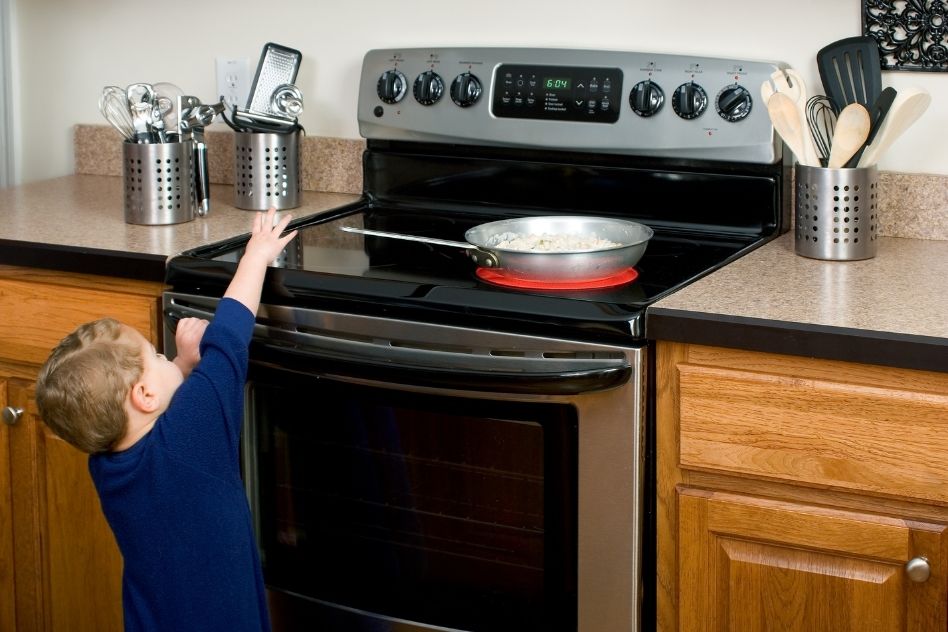
From 1996 a new loophole exists in the constabulary – snug fit allows the brand non to use chemicals. Tight-plumbing fixtures pajamas are less flammable because fires demand oxygen to burn. So if there is no air betwixt the child'southward skin and the fabric, the fire gets less oxygen.
The thing is… any loose edges could potentially grab on fire, there are very specific rules that define a snug fit. This is why sure items are classified as "loungewear" and sold with a label saying "Not intended for children'south sleepwear".
Great, but if your child is sleeping in a slumber sack/bag then it basically doesn't help at all as they're loose to allow leg movement.
In that location'south skillful news though: smoke alarms and increased fire safety standards have made fires 1 of the Least probable ways for your baby to be injured by burning.
Unfortunately, all decisions aren't as like shooting fish in a barrel as selecting organic cotton pajamas, because these toxic chemicals are put in basically everything – from car seats, crib mattresses, toys – even the chewable ones!
Parents should try to avoid buying baby products that have polyurethane foam and a TB117 label, which indicates the production meets the flammability standards set up by the California Technical Message 117. These products are probable to contain flame retardants even though they likely don't pose a burn hazard (according to what researchers say), but can give your kid and your long-term side effects.
Source: https://annainthehouse.com/baby-clothes-flame-resistant/
0 Response to "Should You Dress Your Baby in Flame Retardent Clothings"
Post a Comment